
Why Our Children Need To Feel Sadness
Why Our Children Need To Feel Sadness In Order To Experience Joy
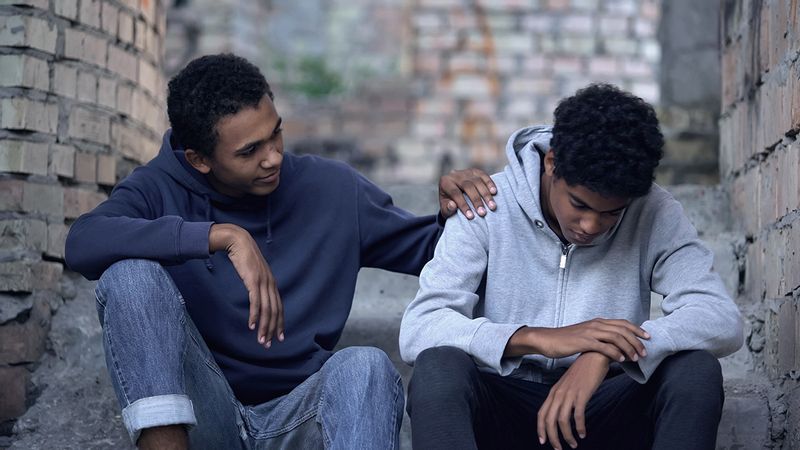
I can clearly remember listening to Melissa Manchester’s song “Don’t Cry Out Loud” as a child back in the 80’s. Those lyrics have been etched in my brain all these years: “Don't cry out loud. Just keep it inside, learn how to hide your feelings.” Well, that is actually terrible advice, according to science.
Things may have been different 30-40 years ago, but now we know it is okay to be sad and to cry once in a while. In fact, sadness is beneficial to our mental health and part of what makes us a fully functioning human. According to psychologist Jonathan M. Adler in a Scientific American article, “Acknowledging the complexity of life [including sadness] may be an especially fruitful path to psychological well-being.” As parents, it is our job to let our children know that it is okay to express their emotions, even if they are uncomfortable.
What Exactly Is Sadness?
Sadness is one of the key four human emotions that we experience, with the others being happiness, fear, and anger. Sadness is an emotional pain associated with a natural reaction to a difficult situation. It can encompass feelings of disadvantage, loss, despair, grief, helplessness, disappointment, and sorrow. It may feel as if a temporary shadow is being cast over our lives and our feelings.
Of course, we must draw a distinction between healthy occasional sadness—like when someone hurts our feelings or when we watch a sad movie—and more serious long-term depression, which is a mood disorder that can be debilitating and needs to be treated with therapy and/or medication. In addition, experts are not recommending that we induce sadness; instead, it is about accepting the natural sadness that we feel during the ups and downs of daily life.
Benefits Of Sadness
Over time, scientists have found many benefits to sadness. According to the video A Brief History of Melancholy, sadness helps us gain wisdom and allows us to more deeply understand profound emotions like awe and joy. Psychology Today explains that sadness is useful because it alerts us to how we should treat ourselves and how we want to be treated by others.
It is also important to understand and accept that sadness is an inevitable and essential part of life. Many people spend their lives striving to be happy as much as possible instead of accepting and embracing other, less enjoyable emotions. Unfortunately, like the song mentioned above demonstrates, many cultures do not encourage or embrace sadness. We are told that we should work hard to smile and be as happy as possible. Because of these cultural forces, many people are uneasy watching others be sad and are not sure how to react. Furthermore, sadness is often masked by anger and irritation when it is not accepted.
This message of truly understanding why we need sadness was profoundly communicated in my all-time favorite children’s movie Inside Out. This extraordinary movie creatively explained how our emotions work, and the importance of our key emotions like joy, sadness, fear, and anger. The most touching moment of the movie is when we learn the lesson that we need sadness in our life to appreciate the positives, and to feel joy.
Here are some of the ways that sadness is beneficial to us:
Helps Us Appreciate The Good
We need to feel sadness in order to fully appreciate the positive, joyful moments that we experience. If we are always happy, then that becomes the norm, and our emotions plateau. In a sense, we would become numb if we only felt happiness. In effect, sadness serves as a contrast to happiness, and makes the happy moments even more special. Feeling sad is certainly not fun, but if we look at it as simply a brief moment in time, then we understand how it plays such a critical role in our overall well-being.
Sadness also allows us to take a step back and be grateful for what we have most of the time. It provides a way for us to switch our train of thought to appreciate all the good in our lives. It ultimately helps us see what really matters in life, such as kindness, love, compassion, family, and friends.
In Inside Out, this lesson was presented when Riley finally allowed herself to feel all her emotions about what it was like to move to a new city. She was intent on running away, but when she took the time to connect to her feelings of sadness and fear, she realized that her life was not as bad as she once thought. Being sad and scared when she was away from her parents made her realize that her parents loved her so much, and that she was so lucky to have a safe home and wonderful family to take care of her. We see at the very end of the movie how the sad rock-bottom moment ended up bringing the family closer together because they were able to communicate and express their emotions.
Deepens Our Connection To Others
Without crying and sadness, Riley and her family would never have bonded. Throughout history, crying and other expressions of sadness have been used as a way for people to express their suffering so that they can ultimately build social bonds with others in their family and community.
Sadness gives us the capacity to open up to others so that they can help us. It gives others a chance to offer comfort and care, which is a human need. It also helps us to recognize when other people seem sad, so we can offer our support to them in their time of need.
Increases Motivation
Finally, sadness serves as a way of motivating us to address a challenge we are facing. When we are happy and satisfied, we can just keep plugging along without feeling motivated and wanting to move forward to achieve new things. Ironically, sadness can trigger us to make changes that will allow us to achieve our goals more effectively.
One study tested this theory by showing participants either happy or sad films, and then asking them to do a demanding cognitive task. Researchers found that participants who were happy spent less time, attempted fewer items, and scored fewer correct answers than those in a negative mood who made more effort and achieved better results. Therefore, a sad mood may increase people’s determination as they see greater potential benefits of making an effort.
This means that it is okay for our kids to be upset sometimes because they did not receive a perfect grade. If they always received A’s, then what would motivate them? It is healthy for them to be sad when they do not perform perfectly, and it is necessary for them to experience those emotions in order to motivate them to try harder next time.
Ways To Help Our Kids To Express Sadness In A Healthy Way
For thousands of years, people have found that the best way to deal with sadness it to express it. When our children feel sad, our job is not necessary to fix it and make it all better. We should first take a step back to allow our kids to express what is bothering them and what caused those feelings. When people are sad, they really just want to be heard and understood. Besides talking through their emotions, we can help our children to express their sadness in the following creative ways:
Read some examples of poetry and then ask them to write their own poem about how they are feeling.
Give them a journal or diary and encourage them to jot down their concerns.
Play some “sad songs”, which can ironically provide some comfort. Maybe they want to write their own song, too.
Provide all kinds of art supplies and encourage them to create and show how they feel. It would be really neat to compare their art on days when they feel different emotions.
Use colors to help them express their mood.
Put on a puppet show to role play how they are feeling.
By Sandi Schwartz